

I wanted to share with everyone in Sabal Springs what I spend some of my free time doing. I fly radio-controlled (RC) planes and race radio-controlled cars. I think I am the only active RC user in our community, and I wanted to tell all of you what it is about.
Before I retired in 2019, I wanted to learn how to fly RC planes. I never had the time or the places to do it when I was working. Once my wife Janice and I moved down here, my plan began. I found out about the Cape Coral R/C Hawks Flying Club on Wilmington Parkway and went to check it out. I got talking to some people and set up a time to learn to fly. The club had trainer planes and I met with one of the instructors.
The best part is I got to learn on club planes with a trainer who would not let me crash! Both of us used controls allowing me to fly and the instructor to take over if I got in trouble. The short version is that after a couple of days I was flying on my own and did not break anything. After a couple of weeks, it was time to buy my first plane.
To fly you need a plane, a transmitter to control the plane, a receiver in the plane to talk to the transmitter, batteries to power the plane, and about $400 to get all of this in a ready-to-fly package. Add in $100 for club dues, $75 for American Modelers Association (AMA) membership, $10 for an FAA license (yes, we need a license to fly just like regular pilots), and a couple of tests and I was in for about $700 to fly my first plane. No, I did not know the costs were that high and believe me, the costs do not end. Golfers understand this part.
Also, we cannot fly anywhere. We have to fly at airfields designated as RC fields. We are limited to 400 vertical feet in the air and must carry AMA insurance. And the places where we fly have strict limits of where we can fly and must be followed. Local clubs may have other rules pilots need to abide by. Flying is a lot of fun, but we need to be responsible while doing it. People can and do get hurt.
Planes can be equipped with programs that help out new pilots. They prevent crashes, help you land and take off, and help you fly. The odds are pretty good you will not wreck your new plane on day one. However, a cardinal rule my trainer told me is that it’s not if you crash, it is when.
I crashed my first plane a few times. I learned that foam glue, Gorilla Glue, and duct tape became my friend. After a few months, my plane was a mishmash of all the above, but it still flew. I learned tricks and learned smooth takeoffs and landings. Slowly I became a decent pilot.
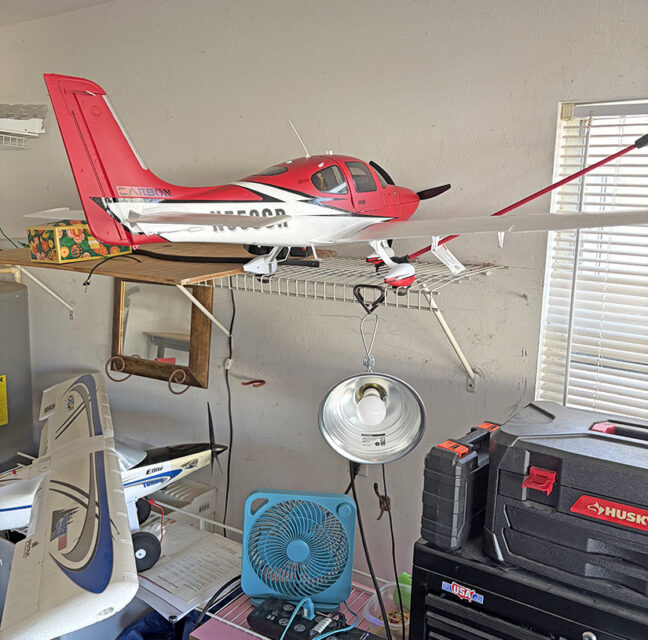
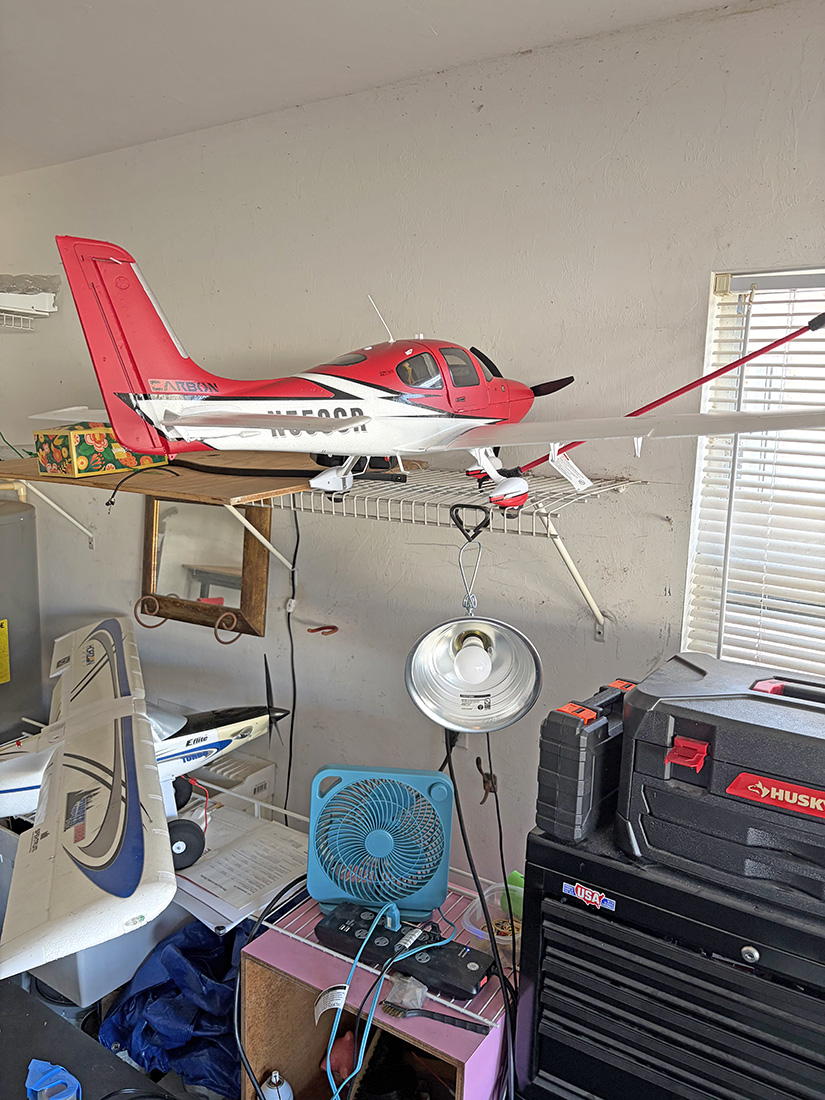
A few months after learning, I bought my next plane. A few months later a third plane graced my garage as my flying became better and better. Once you get the hang of it, you can turn off the electronic helper aids and fly on your own. I discovered swap meets over the next few years to add to my plane collection. My skill level became greater, which can also lead to more disasters. For example, one day my initial trainer plane just kept flying across the parkway all by itself. Evidently, I lost signal, and my plane flew into a swamp never to be found. There are a lot of planes out there with the snakes and gators. I’ve had a couple of catastrophic crashes that all the glue and tape in the world would not fix. One plane gone, time for another. I am in my fourth year of flying and I currently have six planes in my garage.
Our club pilots fly electric planes and jets, jet-fuel powered jets (big bucks), helicopters, and gas planes. The planes run from small to planes maybe half the size of a real Piper Cub. Some of the jet fueled planes run well into five figures so deep pockets are needed for those. My guess is I have invested about $5,000 over the years. I also have a couple of planes up north where I fly. Our club has 270 members, and my north club has only 12. Mornings tend to be busier, but I have never had issues flying. There is a core group of us—maybe 30 people—who fly regularly. We have a lot of fun, fly a lot, and just sit around and B.S. about planes and anything else to help solve the world’s problems.
Like golf, the unexpected can happen. Mid-air crashes happen. Planes can lose signal and nothing good comes out of that. Winds can play havoc. Sometimes planes break up in the air. Back in early December, there were five crashes, all experienced pilots. Let’s just say that things happen and do happen.
Two years ago, the club built a racetrack for cars. Let’s call it another money pit. There are three classes of vehicles: buggies, trucks, and open. Sprint cars were added for the 2025-26 season. I bought a truck and a buggie and became pretty good. I raced a lot last year, but costs can get crazy running planes and cars. I am taking a step back from cars and flying planes for now. Knock on wood, no crashes in more than a year. I am not the best pilot but also not the worst. I tend to fly a couple of times a week. I stick to electric planes. I have learned a lot of tricks that I can now do. There are some real Cracker Jack pilots in the club, top gun kind of stuff. Maybe I will be one of those pilots someday.
If you see my garage open, I am probably working on a plane. Batteries need charging, planes need adjusting, and they need maintenance—Keeps me out of trouble.
Come on out to the airfield sometime. It’s only about 10 minutes away on Wilmington Parkway. The cars race Wednesdays at 10 a.m. Planes fly morning to dusk daily.

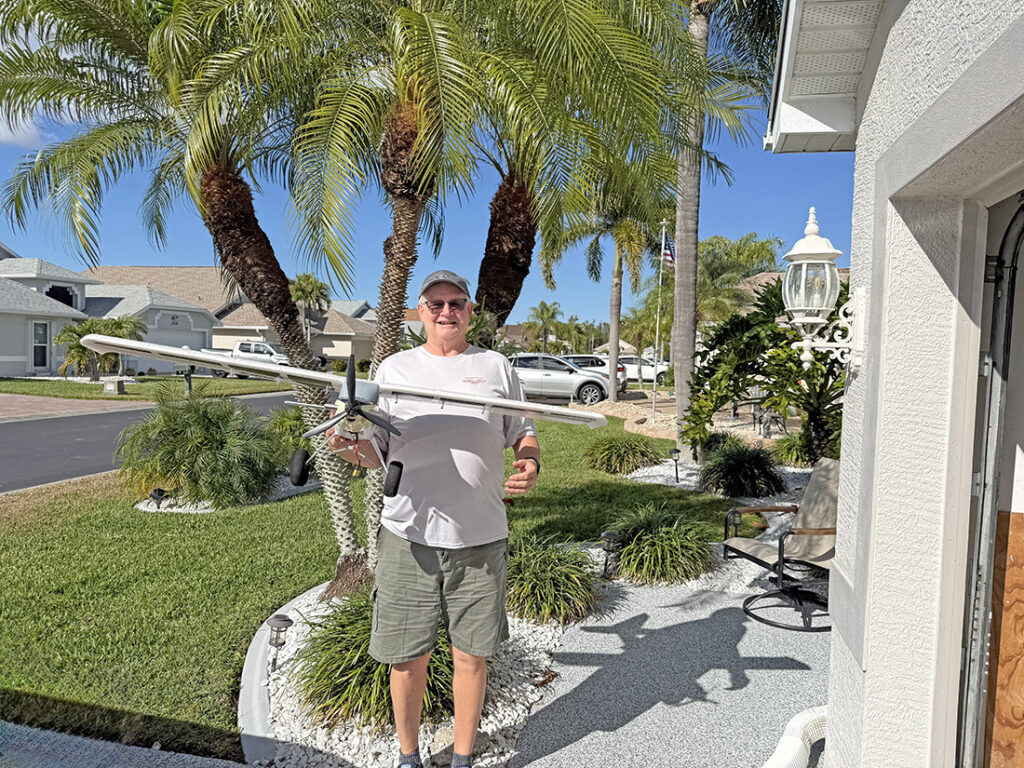
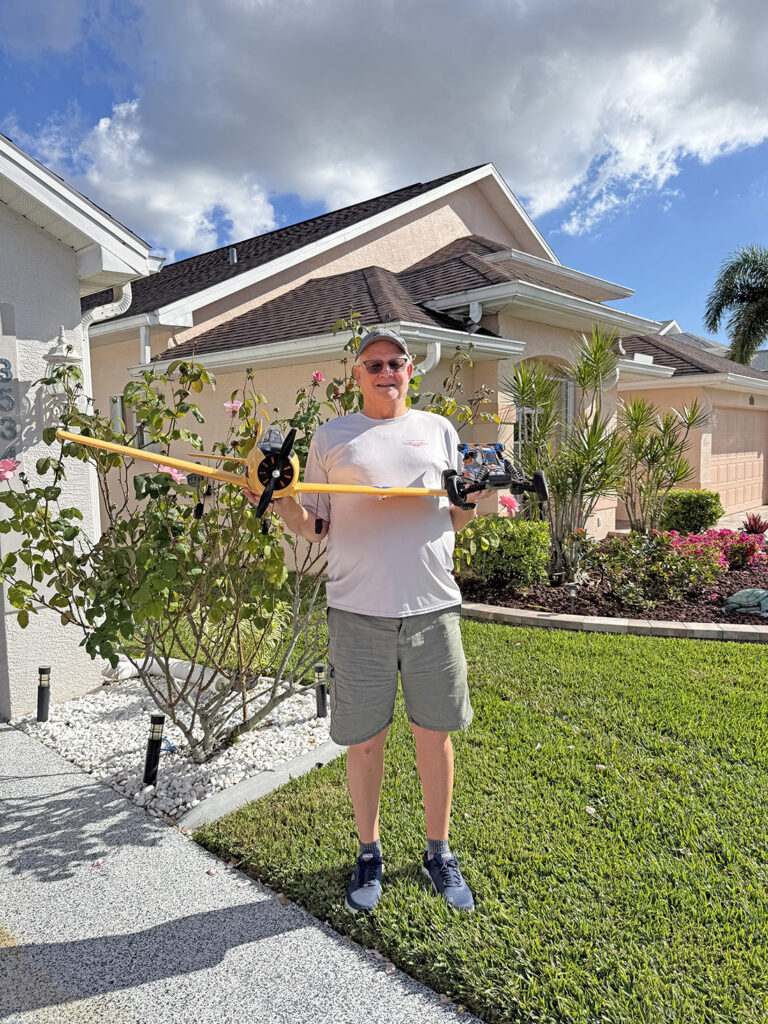
MARTY TOPER IS A RADIO-CONTROL AIRPLANE AND CAR AFICIONADO. HE ENTHUSIASTICALLY ENJOYS ALL ASPECTS OF HIS HOBBY.