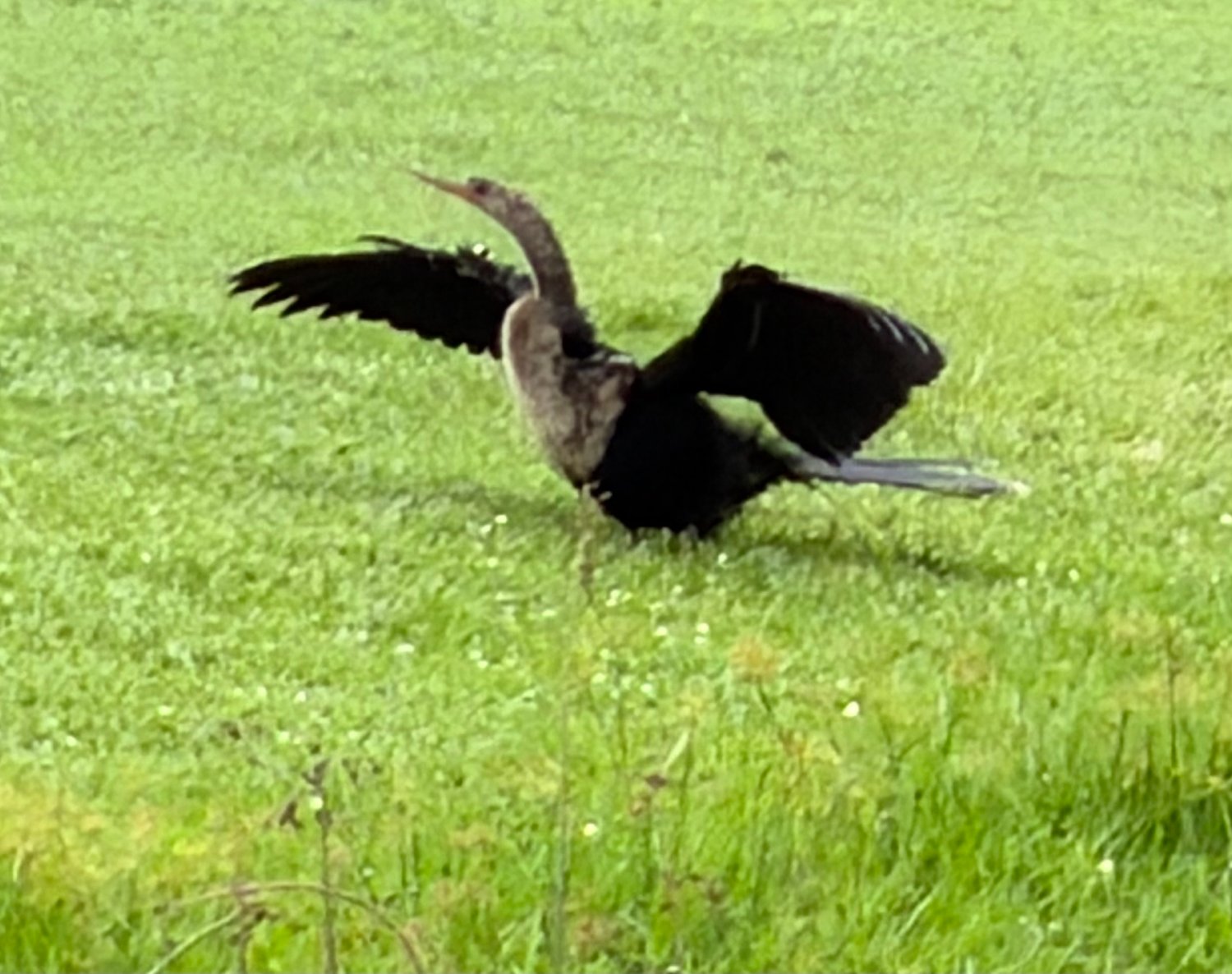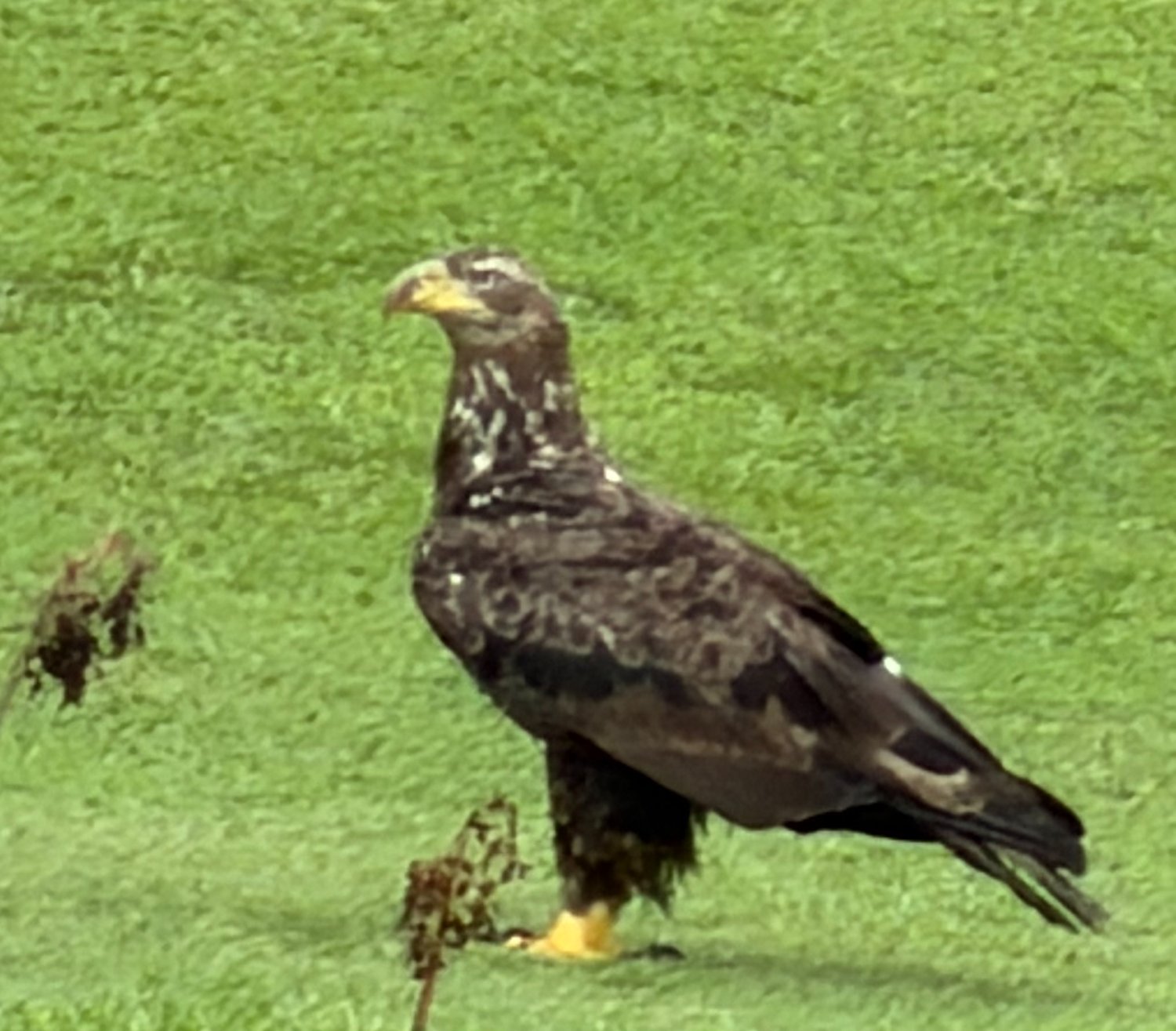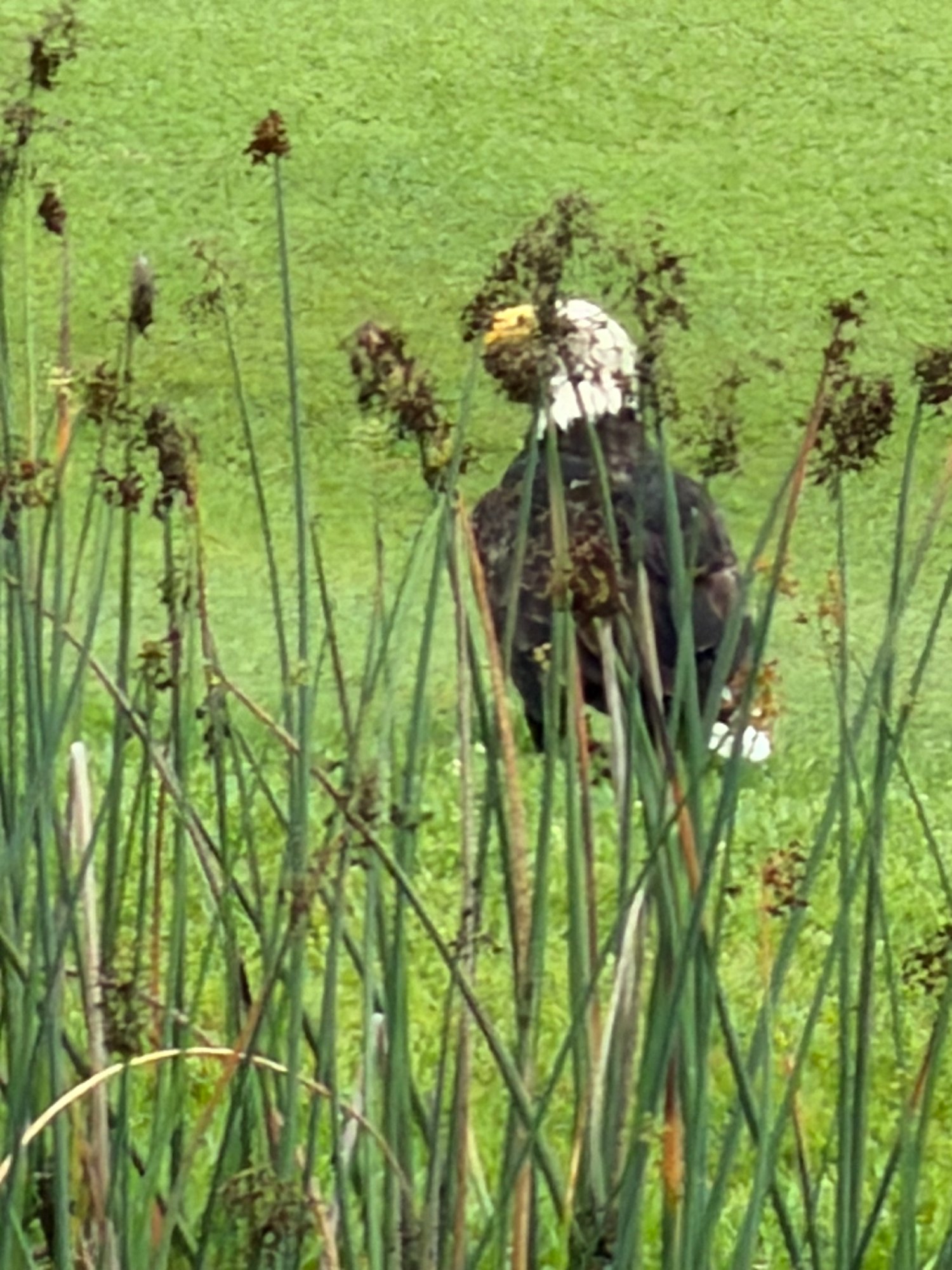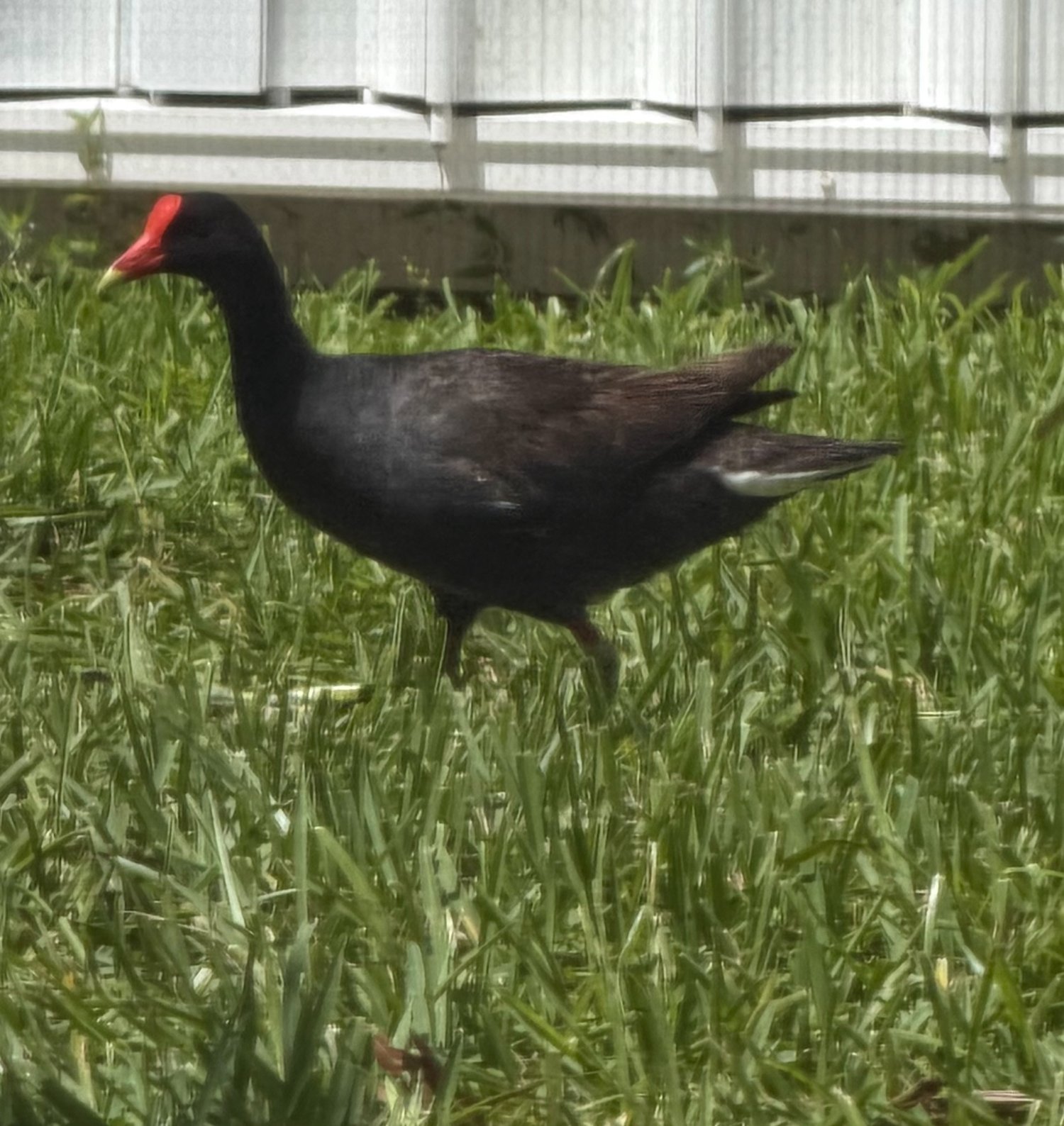

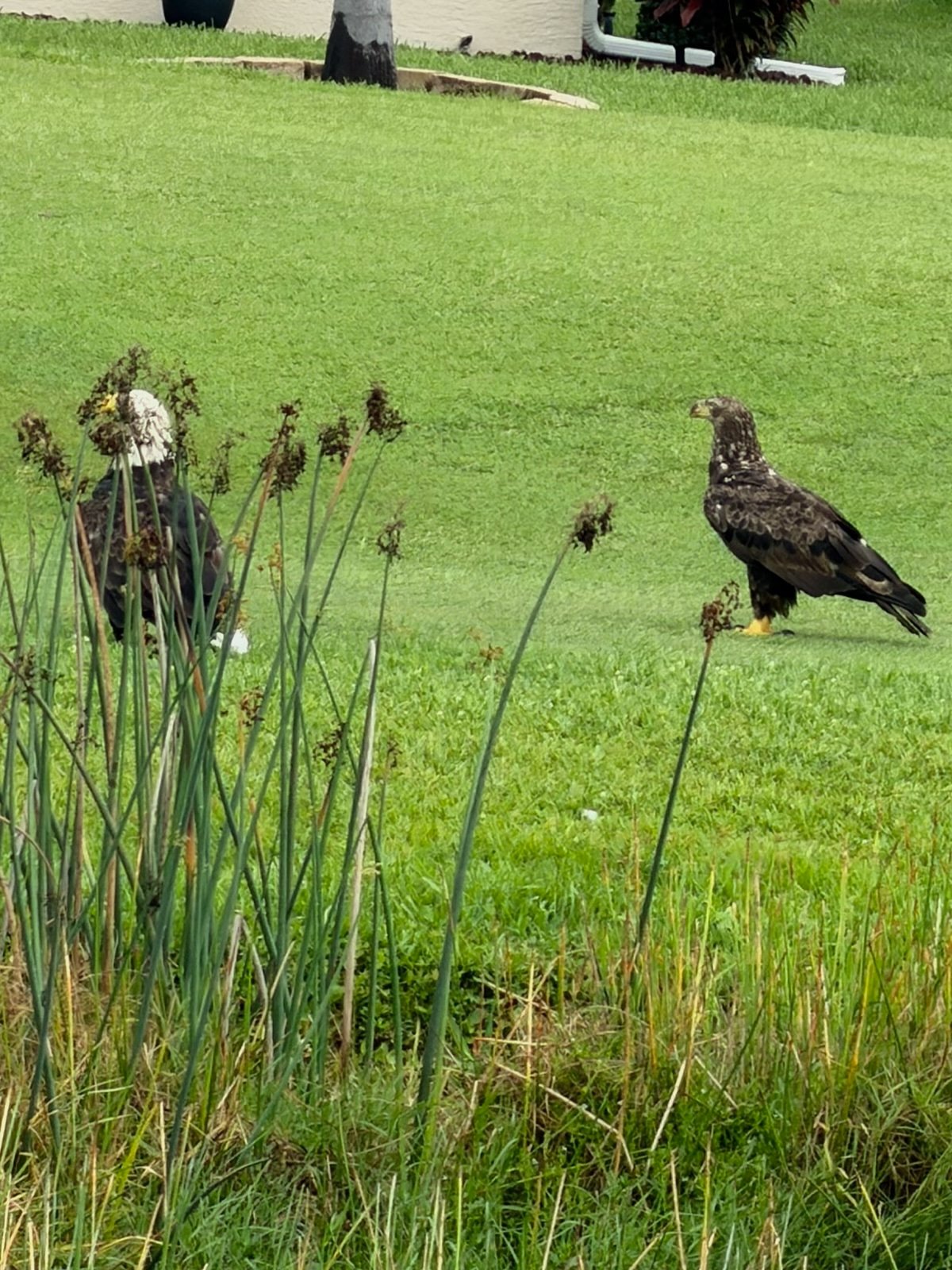
ADULT AND JUVENILE BALD EAGLES SPOTTED ALONG SABAL SPRINGS’ SHORES.
If you enjoy casually observing birds for enjoyment, otherwise known as bird watching, or pursuing the more active endeavor of finding, identifying, and learning about birds aka “birding”—and there is a difference among enthusiasts — Florida has a bounty of offerings. Here in Sabal Springs, we have a large variety of avian visitors.
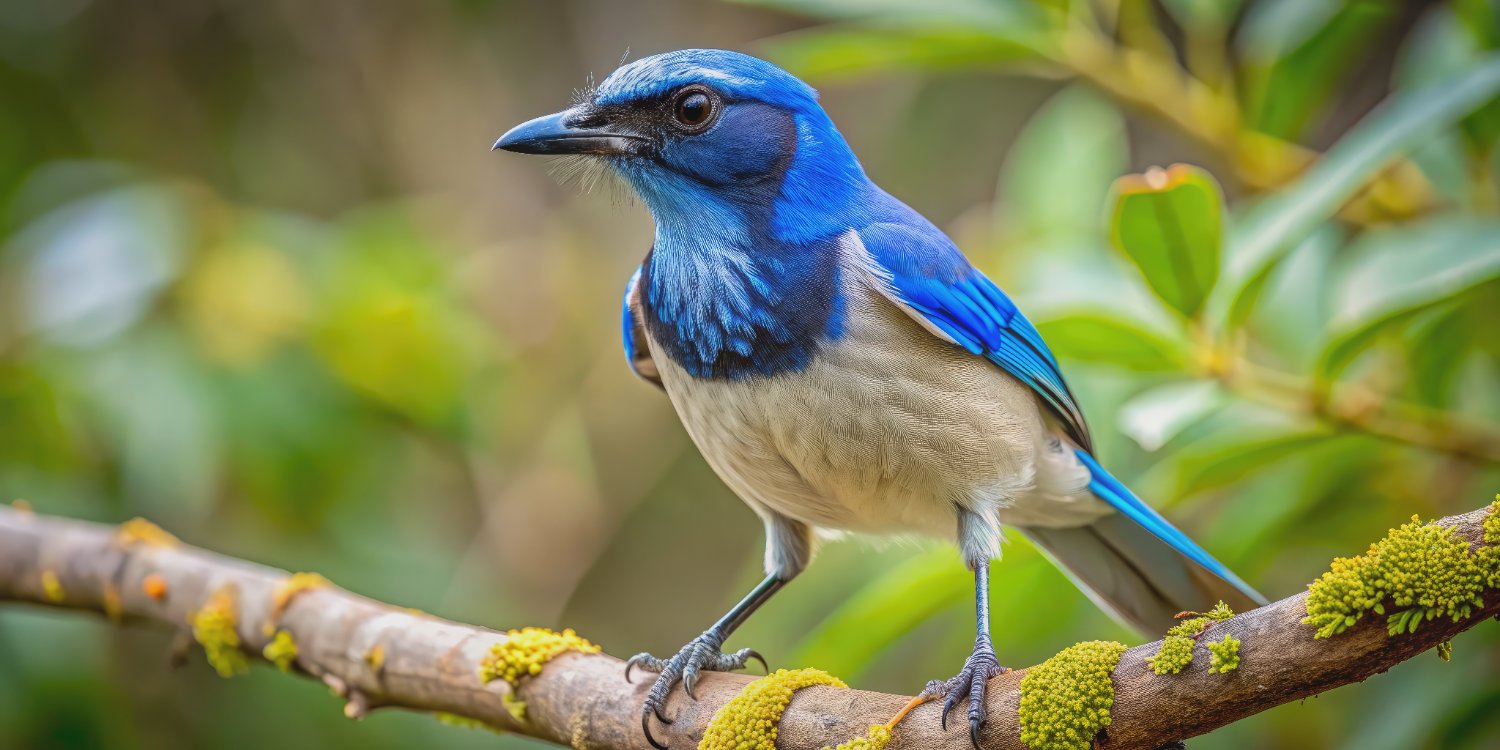
As previously noted in an earlier edition of the Breeze, Florida is one of the best places in North America for birding because of its location on major migration routes and its wide variety of habitats. Florida is home to more than 300 native bird species, which can be seen throughout the year or seasonally. And that number increases by a couple of hundred when naturally occurring rare visitors alight across the state. There are about 17 non-native bird species that have come to call Florida home as self-sustaining wild populations, including Monk Parakeets and Nanday Parakeets. The Florida Scrub-Jay is the only bird that is truly endemic to Florida—meaning it naturally occurs nowhere else in the world.
Florida is considered one of the top three birding states in the United States due its diverse and numerous habitats, including the Everglades, coastal beaches, mangroves, Pine flatwoods, Cypress swamps, hardwood hammocks, and freshwater lakes and rivers.
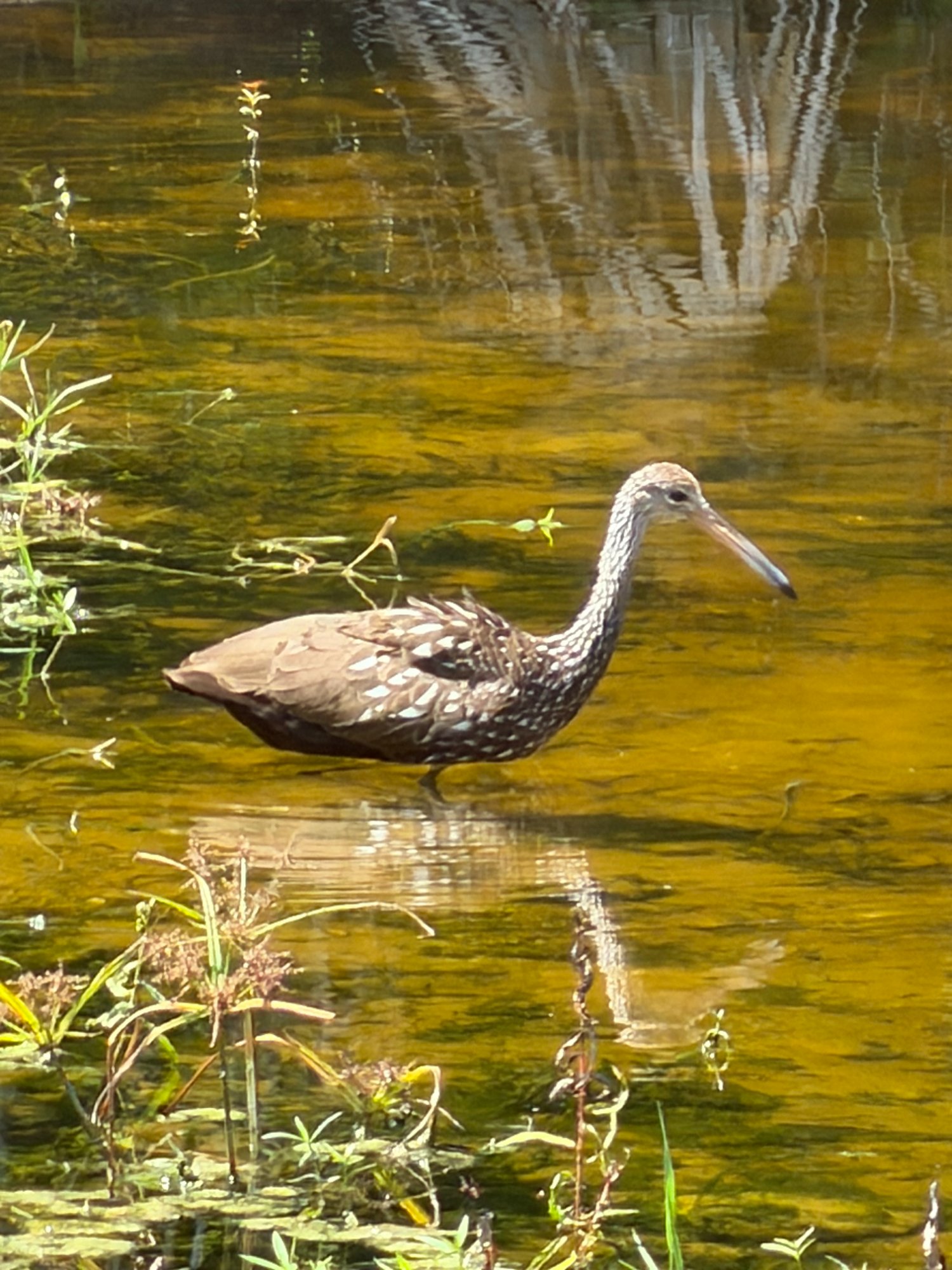
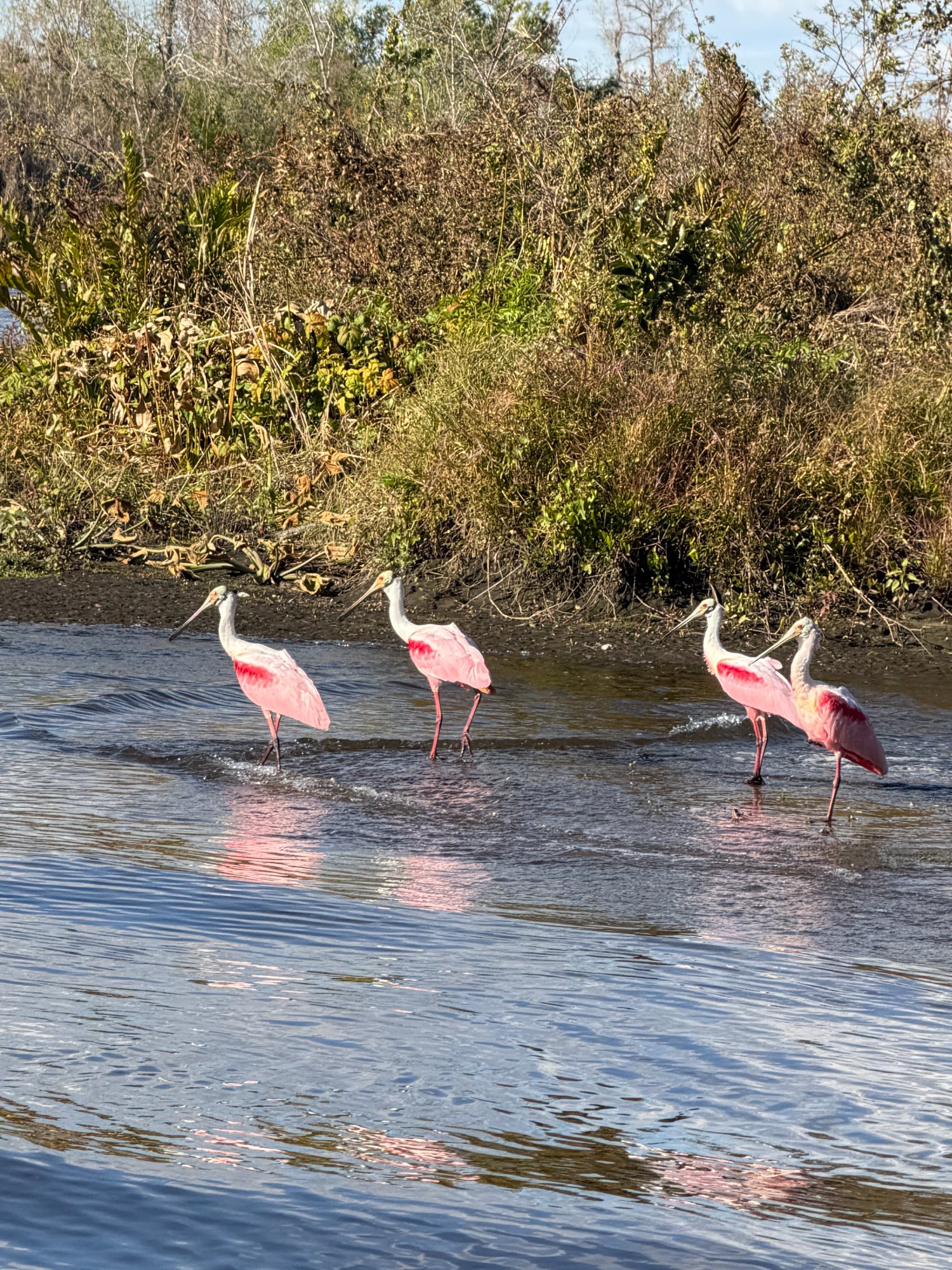
During a walk or drive around Sabal Springs, you are likely to encounter Wood Storks, Limpkins, Snail Kits, Painted Buntings, and dozens of species of herons, egrets, ducks, and other shorebirds. If you live along the big lake or one of the dozens of ponds, you no doubt are in bird heaven with sightings of the Roseate Spoonbills and Bald Eagles.
Bald Eagles are reported to be one of Florida’s greatest conservation success stories. While we all know they are the national bird of the United States, Florida has one of the largest breeding populations in the lower 48 states, with about 1,500 to 2,000 nesting pairs, and thousands more individual Eagles in habitation during the year. Unlike their northern cousins that migrate south in the winter, not unsurprisingly most Florida Bald Eagles live in the state all year long. They begin nesting early, typically October through May, with eggs most often laid from late November through January. During nesting season, you can follow our local Eagle celebrities on the Southwest Florida Eagle Cam.
If you are interested in learning more about our community’s bounty of feathered friends and other wildlife, check out the Sabal Springs Nature Lovers Facebook page…lots of great photography and videos being posted by our neighbors.
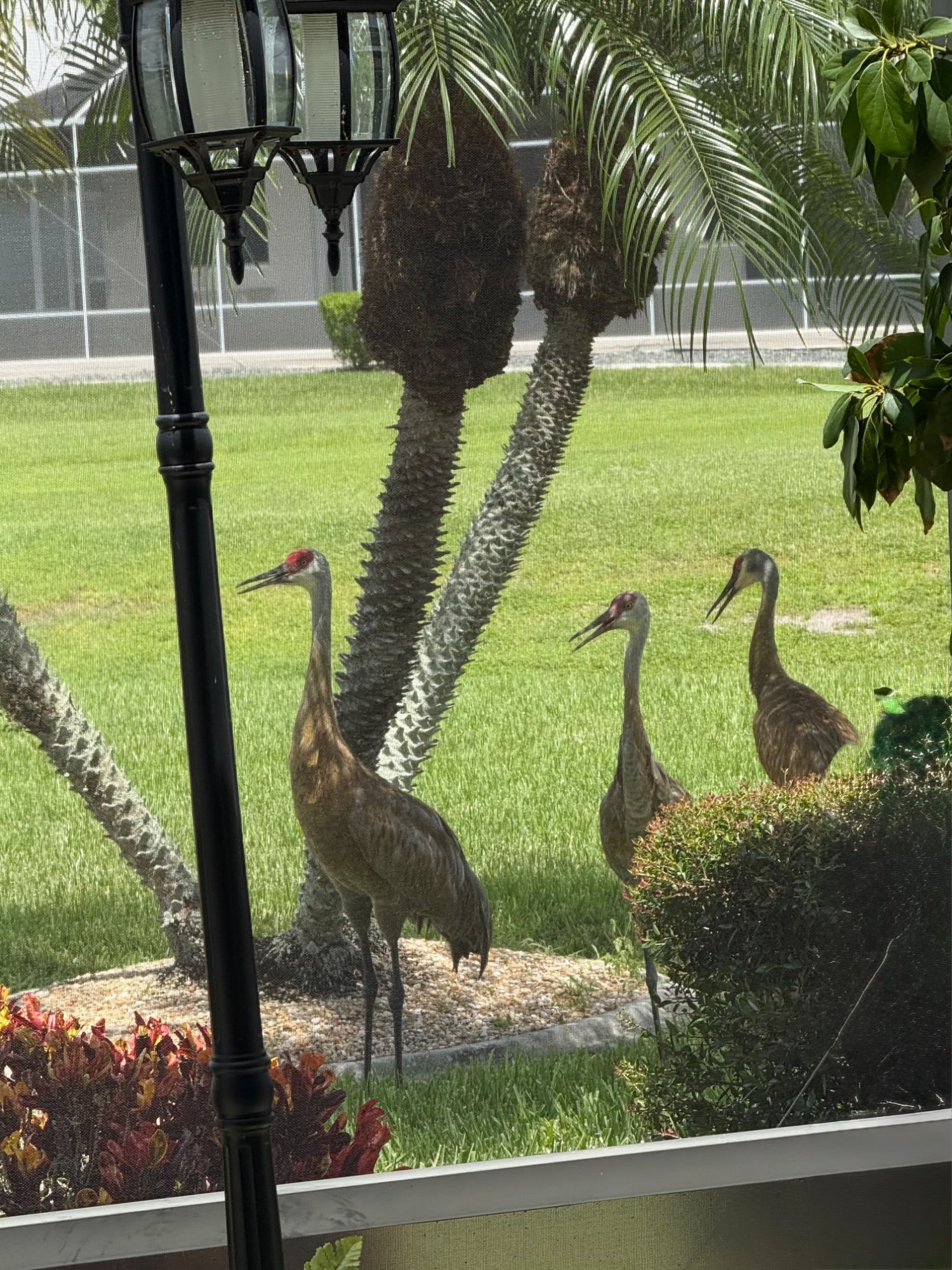
The Breeze would like to thank Sue Mattson for sharing her love of birding with us—please enjoy her photos. And we encourage you to send us your bird pictures or pictures of other wildlife to be featured in a future edition of the Breeze: [email protected].